The UK’s old analogue landline network is being switched off, with the final date set for 31 January 2027. Your phone service does not disappear. Calls are moving to a digital system that runs over broadband instead of copper wires, and most people will keep their existing phone number and handset. Your provider will contact you before your line changes.
What is actually changing
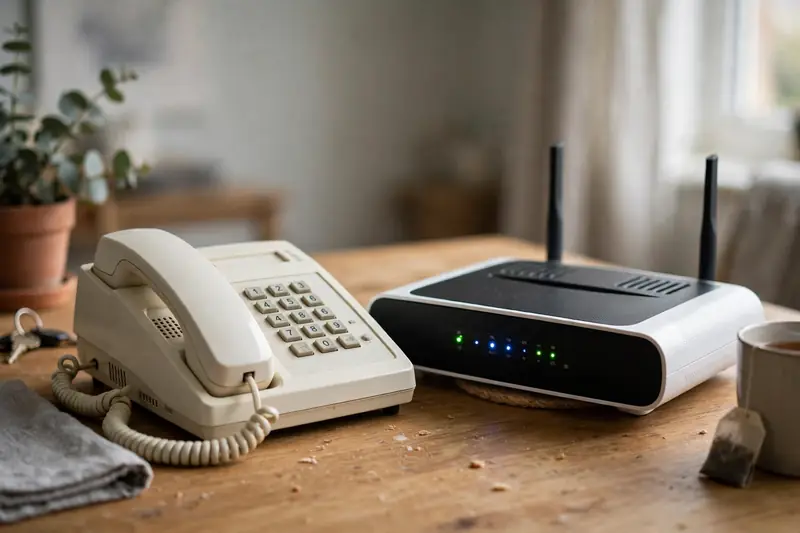
For over a century, UK landline calls have travelled over the Public Switched Telephone Network, or PSTN, a copper-wire system. Openreach, which runs most of the network, is retiring that system and replacing it with digital voice calls carried over broadband, usually using a technology called Voice over Internet Protocol (VoIP). BT calls its version Digital Voice; other providers have their own names.
The industry announced the retirement back in November 2017. The original target was the end of 2025, but the deadline was pushed back twice after concerns about vulnerable customers and devices like telecare alarms. Openreach now gives 31 January 2027 as the final date, and says there is no extension.
What stays the same
For most homes, the change is simple. You keep your telephone number. You usually keep your handset too: instead of plugging it into the wall socket, you plug it into your broadband router. Your broadband service itself does not change.
The migration is already well under way. The government reports that more than two-thirds of UK landlines have already been upgraded to digital, and providers are moving customers area by area. In mid-2026, Openreach estimated around 1.5 million lines were still on the old network.
The power cut problem
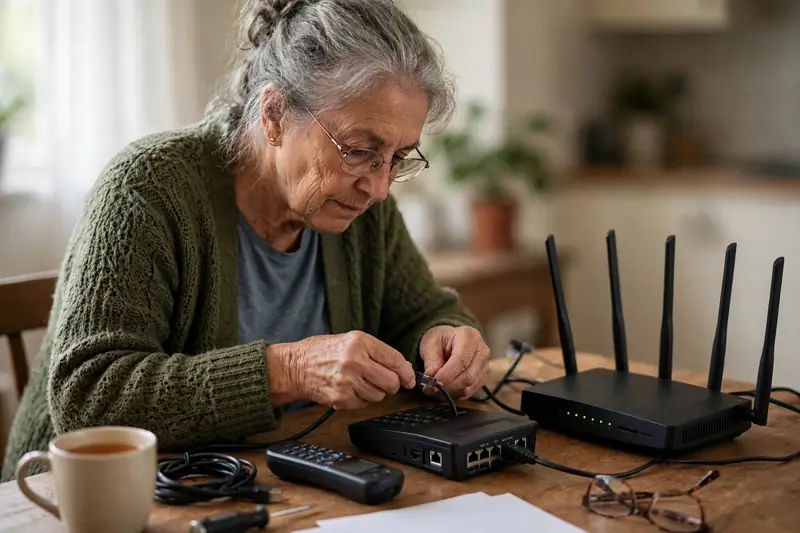
This is the change that catches people out. The old analogue line drew its power from the telephone exchange, so a basic corded handset kept working when the electricity went off. A digital line runs through your broadband router, which needs mains power at home.
The regulator Ofcom has rules for this. If you depend on your landline and do not have a working mobile or reliable signal, your provider must give you a backup solution free of charge, usually a battery backup unit or a mobile phone, that keeps you connected to emergency services for at least one hour during a power cut. A 999 call will connect through any available mobile network, even if it is not your own provider’s, so a charged mobile is the simplest backstop.
Telecare alarms and vulnerable users
Anyone with a telecare alarm, pendant, or health monitoring device needs to pay attention. Some analogue devices do not work reliably on digital lines and may need upgrading. Providers are giving extra support to telecare users, including free engineer visits and battery backups, and have agreed not to migrate telecare users until a working solution is in place.
If you or someone you care for uses one of these devices, contact both your phone provider and the alarm supplier now, and confirm the device will work after the switch before it happens.
What if you do not have broadband?
You do not have to buy an internet package to keep a landline. Some providers offer an interim dedicated landline service designed to keep your phone working exactly as it does today until a digital solution is ready, or until 2030 if that comes sooner. The government also notes that nobody has to lose their landline service because of this change, and a landline-only option remains available.
Businesses and other phone-line devices
The switch-off covers more than home phones. The older ISDN2 and ISDN30 business phone systems run on the same network and are withdrawn on the same date, and they are not covered by the temporary emergency voice service that may carry over single lines. Businesses should move to VoIP or SIP systems before the deadline.
It is also worth checking anything else that uses a phone line: burglar alarms, lift lines, card payment machines, and door entry panels can all be affected.

What to do now
You do not need to act until your provider contacts you. They will write to you ahead of your migration with your date. In the meantime, three steps will keep you ready.
First, tell your provider now if you rely on your landline or use a telecare device, so they can arrange the extra support. Second, keep a charged mobile phone available for emergencies during power cuts. Third, check any alarms or devices connected to your phone line and confirm with their suppliers that they will keep working digitally.
The official guidance is set out in the government’s moving landlines to digital technologies page, with a broader overview on the UK transition from analogue to digital landlines. For what happens to your phone in a power cut, an independent guide explains your digital voice rights and backup options.